Saturday, September 8, 2012

North by 2000+ by H.A. Hargreaves

I've been participating in LibraryThing's Early Reviewers program for several years now. Most of the time, I choose books from authors or publishers whose names I recognize, but once in a while, I select a book that is totally new to me. Frequently, I've ended up disappointed but the odd time that I hit upon a real gem, it's a great feeling.

Recently, I won North by 2000+, a collection of science-fiction stories originally published over several decades by author H. A. Hargreaves. Given how much I enjoy both sci-fi and Canadian literature, I really ought to have heard of Hargreaves before now, but his output has been relatively small compared to other better-known sci-fi writers. An earlier version of this collection, entitled North by 2000, had been published in 1975, and this new anthology, containing 5 additional stories and an introduction and afterword by Robert Runte, was recently released by a small independent publisher, Five Rivers Publishing.

I enjoyed the stories very much, particularly "Dead to the World", "Cainn", "Tee Vee Man" and "More Things in Heaven and Earth". Alhough these stories were written many years ago  and there are some discrepancies between the future as Hargreaves had envisioned it and the reality as it is today, the stories do not feel dated. It is Hargreaves's exploration of human relationships, to one another and to the environment, in an imagined setting that makes the stories memorable. I also found Runte's commentary on "Canadian science-fiction" and how it differs from that of the British and American tradition thought-provoking.

Having experienced hits and misses with small publishers, I was genuinely surprised by the quality of the writing. I recently finished all the short stories and novelettes nominated for this year's Hugo awards, and certainly, Hargreaves's stories would not suffer in comparison. I'm glad that Five Rivers Publishing has chosen to reprint his work, as it deserves a wider audience.

Thursday, August 30, 2012

Here Lies Arthur

by Philip Reeve

Here Lies Arthur follows the life of a young girl named Gwyna after an attack on her village. When no one else survives, she is left all alone and escapes into the woods. There, she meets Myrddin, a bard rumoured to have magic, who saves her. Gwyna finds out the Myrddin is trying to unite Britain, which after being attacked by the Saxons, is now split up into many small kingdoms and villages. Only under the rule of Arthur, the leader of a fierce war-band, does Myrddin think this can be achieved. However, several obstacles stand in their way.

One of these, Gwyna finds out, is convincing some people that the gods are on Arthur's side. To do this, Myrddin has Gwyna rise out of the lake as a goddess of water and give Arthur a sword named Caliburn in front of the non-followers. After successfully tricking them, Myrddin disguises Gwyna as a boy and takes her to be his servant.

When I first picked up this book and saw who had written it I wasn't eager to start it. After being unimpressed by Reeve's Fever Crumb series (though my Mom and co-author of this blog liked it very much) and finding the Hunger City Chronicles only OK, I wasn't expecting much from this book. However, this book didn't win the 2008 Carnegie Medal in Literature for nothing.

This book ended up being quite a page-turner with an interesting mix of fast-paced moments and funny ones.  I found it shorter than most books of the same genre; however, after reading it, the length seemed just right. It is not a stay-up-all-night-reading-under-the-covers book, but one that I enjoyed reading for fun because the plot and the general idea was so clever and interesting.

I also found this book so appealing because it took the myths and put history behind them. This made me think about whether there actually was an Arthur and if there was one, how close the real one could have been to the Arthur portrayed in the legends and myths.

I would recommend it for teens who love historical fiction, but especially ones who know the King Arthur legend and would understand how cleverly the book is written. Because I know the legend myself, I'm not sure if people who do not know it would find Here Lies Arthur confusing or not.

Overall, I am very satisfied with the book and hope to keep a more open mind about Philip Reeve's books.

Tuesday, August 14, 2012

Dear George Clooney, Please Marry My Mom by Susin Nielsen

Susin Nielsen’s first book, Word Nerd, is one of my favourite young-adult novels of the past few years, and it had won a number of Canadian book awards. I looked forward to reading this second novel but I did wonder if it would live up to expectations, and I'm happy to report that I enjoyed it just as much as the first.

The story centres around twelve-year-old Violet who is trying to cope with her parents' separation, especially the fact that her father is now living with his young and beautiful second wife in a luxurious home in Los Angeles. Dismayed with the string of losers that her mother had found through dating services and worried about her most recent romantic interest, Violet attempts to set her mother up with the ideal man, George Clooney.

Like Word Nerd, this novel features hilarious situations, heartwarming moments, and quirky memorable characters. A few of the characters from the first book reappear in this one in more minor roles, and I was more than pleased to encounter them again, as I particularly love Nielsen's portrayal of her characters. She has a way of making each person unique, no matter how "ordinary" he or she is.

Monday, July 30, 2012

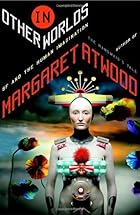
In Other Worlds: SF and the Human Imagination by Margaret Atwood

In Other Worlds: SF and the Human Imagination is a collection of essays by Margaret Atwood based loosely on the theme of science-fiction. Because they cover a broad variety of subjects and are taken from her writings and lectures over the past several decades, they are rather disjointed, and occasionally, there is some repetition of ideas.

I enjoyed in particular Atwood’s reflections on her own novel The Handmaid’s Tale and the controversy it has spawned since its publication in 1985, as well as her thoughts on 1984, Brave New World and Never Let Me Go. I also liked her sentimental yet analytical look at comic books, which made up a large part of her childhood reading, as they did my own.

People I know seem to either love or hate Atwood’s work. I belong in the former category, and I frequently find her observations clever and thought-provoking. If you’re not an Atwood fan already, I’d suggest giving this collection a miss, as there may be too many personal reminiscences to be of interest. However, if you’ve enjoyed her novels and essays, then this book is worth a read.

Tuesday, July 3, 2012

Among Others by Jo Walton

For the first time ever, I joined WorldCon as a supporting member and consequently got access to their Voter Packet. An amazingly good deal for only $50, the packet includes downloads of almost all the nominated works. Included was Jo Walton’s Among Others, a nominee in the best-novel category. Walton is a Welsh-Canadian author who makes her home in Montreal.

I liked this book very much but thought that it was an unusual choice for a Hugo nomination. First, it is not in any way a science-fiction novel; rather it is about science fiction. Throughout the book, the main character Mor comments on the novels (mostly but not all from the sci-fi and fantasy genres) she has read and is reading. Indeed, the novel seems very much Walton’s fond and nostalgic inventory of all the novels she herself had read as a youth. This may all be too much for readers who are not fans of sci-fi, but given that I’d also spent many hours as a teenager devouring many of the same books, I found the commentary quite enjoyable.

It’s also questionable whether this could be called a fantasy novel. Certainly, Mor talks about fairies and magic, and she calls her mother a witch. However, it is not always clear what is real in the context of the novel and what is a product of Mor’s imagination. She even wonders herself if certain events that had happened were caused by magic or simply events that would have occurred in any case.

However you want to classify this book, it is a lovely coming-of-age story. Through her passion for sci-fi and fantasy, Mor, who had always felt like she did not fit into the world, finds like-minded people who care about what she has to say. She also starts to build a bond with her estranged father through their shared interest in books. In addition, this novel pays tribute to libraries and librarians, and as a lifelong user of libraries, how could I not love that?

Wednesday, June 20, 2012

Red Maple Mini Reviews - 4# No Safe Place

by Deborah Ellis

No Safe Place focuses on three teenagers, all from different but troubled pasts, and their journey to England where they hope to finally be safe and free. There is a mystery surrounding the main character, Abdul, who comes from Kurdistan and has a mission, with a purpose yet undisclosed, to reach Penny Lane. The two other characters also add much to the story with their unique personalities -- Rosalia, a gypsy from Czechoslovakia who is forced to go to Germany to become a prostitute, and Cheslav, a musician who ran away from socialist Russia.

In No Safe Place, Deborah Ellis writes in a straightforward way that not only adds tension and suspense, but also enhances the plot and character development.  I like the feeling of urgency in her writing when the tension is high. Overall, compared to her other books such as Looking for X and The Breadwinner Trilogy, this book is more action-packed. Ellis also brings to light social injustices in areas of the world that are not always frequently mentioned in the news, by telling us Cheslav's story. She also makes us take an inward look at possible injustices in our own countries, by telling us Rosalia's story. However, the main character's, Abdul's, story was set in the Middle East, similar to many of her other books. I hope, in future books, that Ellis might consider exploring the stories of teenagers in other parts of the world.

Sunday, June 17, 2012

I Am Number Four

by Pittacus Lore (James Frey and Jobie Hughes)

This is a review for a book I read during the 48-Hour Book Challenge.

I Am Number Four is centered around John Smith, an alien from the planet Lorien. When the Mogadorians, another alien race, came and destroyed the Lorien race, only nine Lorien children managed to survive, along with nine guardian "CĂȘpan" to protect them. They were sent to Earth to one day come back and revive the deserted planet of Lorien. However, the Mogadorians continue trying to eliminate the Lorien race by killing the remaining eighteen Loriens on Earth. Luckily, when the Loriens left, a charm was placed upon the nine children which made it so that they could only be killed in order of their given numbers. In I Am Number Four, One, Two, and Three have all been killed. John Smith is Number Four and is being tracked by the Mogadorians.

This book was highly entertaining and its plot was very captivating. One complaint I had was that the authors tried to squeeze too much action and description into one battle scene which ended up overwhelming and confusing me. I also thought that the characters' personalities seemed typical and unoriginal. However, this was overall a very good book and I would definitely recommend it to any young adult who likes romance, science-fiction, and action.

The second book in the series is The Power of Six and the third book The Rise of Nine will be coming out in August 2012.